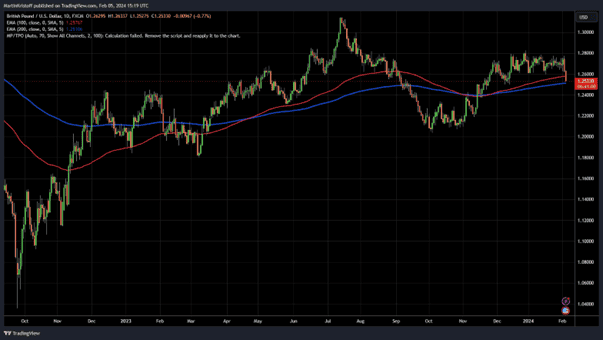
GBP/USD lost almost 1% on Friday, recording losses for the week as the US Dollar (USD) recovered on the back of impressive labour market data for January. The pair has seen a drop below 1.2550 and the near-term technical outlook points to a lack of buyer interest, which may indicate a renewed decline.
NFP exceeded expectations
Nonfarm Payrolls (NFP) in the US rose by 353,000 in January and the unemployment rate remained unchanged with an expected increase to 3.8%.
The relatively hawkish tone the Fed struck after Wednesday's two-day monetary policy meeting offered no relief to US Treasury bond yields, while the US dollar found support in the Fed's rejection of a March rate cut. The U.S. central bank extended the pause and Fed Chairman Jerome Powell said during a post-meeting press conference that "based on today's meeting, I don't think we should cut rates in March."
Amid renewed demand for US dollars, the GBP/USD pair's growth remained capped at 1.2750. Sterling failed to take advantage of the BoE's hawkish rhetoric. Following its Thursday February monetary policy meeting, the UK central bank left its key interest rate unchanged at 5.25%, but said inflation risks are skewed to the upside, while raising its inflation forecast for 2025. BoE Governor Andrew Bailey remained non-committal on the Bank's next interest rate move at upcoming meetings. The voting pattern revealed a three-way split, with one member voting for a cut and two policymakers voting for an increase.
Technical outlook
The short-term outlook for GBP/USD continues to point to limited range trading action as long as price remains below static resistance near 1.2830.
Acceptance above this level is needed to reach the rounded 1.2900 level, above which a new uptrend towards the psychological barrier at 1.3000 will begin. In the near term, the pair could find initial resistance at the 21-day simple moving average (SMA) just above 1.2700.
A sustained move below the weekly low at 1.2625 could trigger a new downtrend towards the rising 200-day SMA at 1.2560. Eventually, the 100-day SMA at 1.2475 will be the line for buyers.