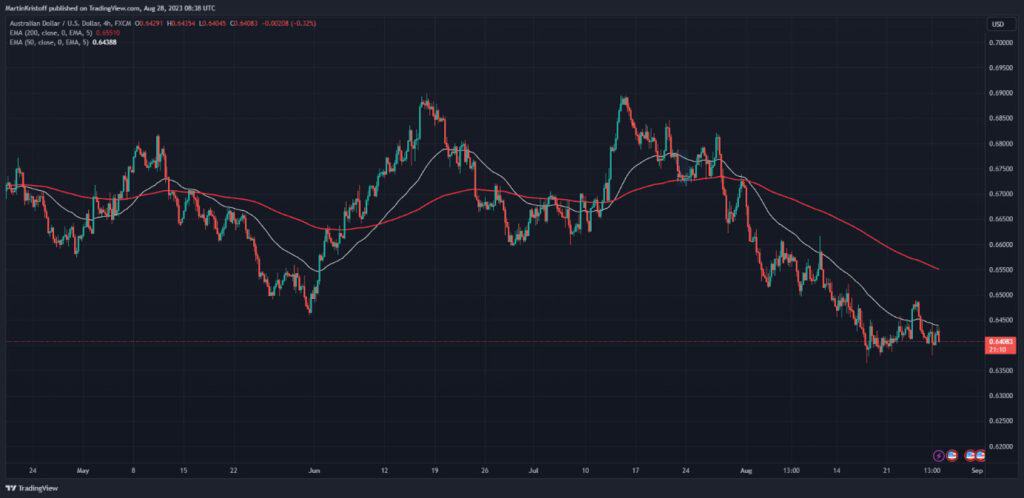
China introduced new measures over the weekend to attract investors back to its disrupted equity markets, which, along with better-than-expected domestic data, provided a modest boost to the Australian dollar (AUD) on the first day of the new week.
It is worth recalling that China's Ministry of Finance said in a brief statement on Sunday (27.08.2023) that the stamp duty levied on share trading will fall from 0.1% to 0.05% from 28 August, the first reduction since 2008. In addition, the Australian Bureau of Statistics (ABS) reported that retail sales, a measure of the country's consumer spending, rose 0.5% in July, versus consensus estimates of a 0.3% increase and a 0.8% decline in the previous month.
Correction remains limited
In addition, the positive tone around equity markets is pulling the safe-haven US Dollar (USD) away from its highest level since early June.
However, the USD's corrective decline remains limited due to rising bets on further Federal Reserve (Fed) policy tightening. In fact, markets are pricing in the possibility of another 25bps rate hike by the end of this year and expectations were confirmed by Friday's hawkish remarks from Fed Chairman Jerome Powell.
In Friday's keynote speech at a symposium in Jackson Hole, Powell said the Fed may need to raise rates further to cool still-too-high inflation.
Deteriorating economic conditions in China
Moreover, growing concerns about deteriorating economic conditions in China and looming recession risks are limiting optimism in the markets. In addition, expectations of another rate decision by the Reserve Bank of Australia (RBA) in September to not hold rates are contributing to capping the AUD/USD pair and attracting fresh sellers at higher levels.
This in turn suggests that the path of least resistance for AUD/USD is to the downside, although sellers may have to wait for a break below the 0.6400 level before making a new decline, unless the market offers new market information that could change the current trend.